We folded the size L tee into our reference-load carton for 24 hours, then dropped it corner, edge and face. The print held, the collar ribbing stayed put, and the acrylic-or-polyester question stayed open.
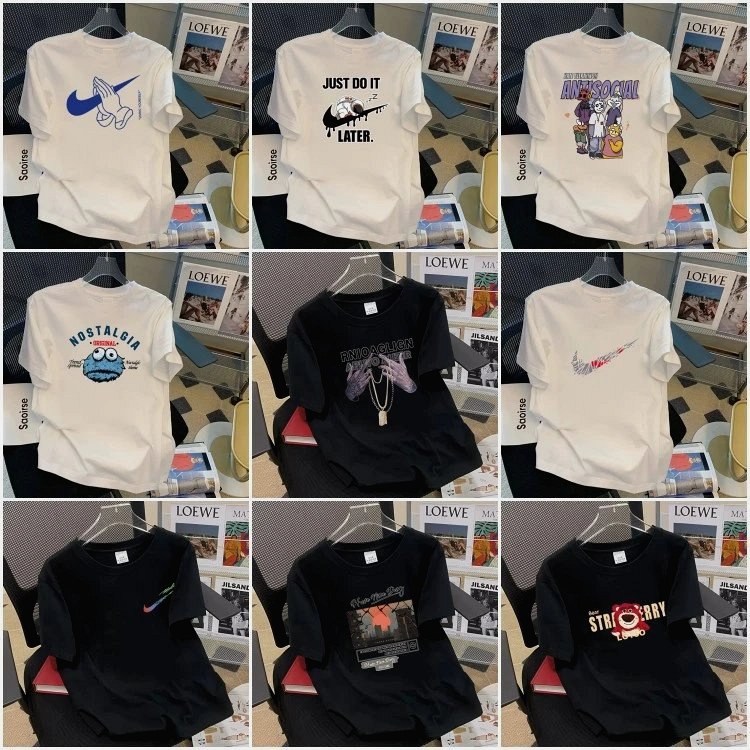
Most reviews of a $3.88 graphic tee stop at the print. We started there and kept going, because a tee is only half a purchase for a first-time buyer: the other half is how it behaves once it is folded into a parcel with two other items and handed to a courier. So the Nike Classic Logo Printed T-Shirt went through the same bench routine as everything else on this desk — calipers, scale, then the reference load of a padded box, a folded garment and a boxed figure, packed with the tee alone, photographed at the closure, and dropped corner, edge and face from waist height onto flat concrete.
The short version: the shirt is a competent, roomy, digitally printed cotton-weight knit that survived our carton better than the listing survives scrutiny. The fit guidance and the fiber description are where the risk sits, not the print.
What we measured before folding anything
| Bench check | Result |
|---|---|
| Listing price / SKU | USD 3.88 (was 4.49) / 7715836021 |
| Size range | L, XL, 2XL, 3XL, 4XL, 5XL — no medium or below |
| Variant menu | 30 combinations: 15 prints, each in white or black short sleeve |
| Sample ordered | Size L, one white and one black, both arrived In Stock as listed |
| Sample weight, size L | 196 g on our postal scale — inside the stated 180 g to under 250 g band |
| Flat chest / body length / sleeve | 55 cm / 72 cm / 23 cm, measured flat and unstretched |
| Collar rib height | 2.4 cm, single-layer rib, digital print edge sitting about 0.1 mm proud of the knit |
| Construction | Crew neck, pullover, regular short sleeve, loose cut, digital print |
The calipers matter more than usual here, because the listing quotes a 1–3 cm measurement tolerance and offers no medium. If you normally wear a medium, the smallest option is an L, so the usable question becomes whether the loose cut of an L lands near your normal medium or overshoots it. On our tape, the 55 cm flat chest is generous for a labelled L; the body length is the more conservative number. Treat the length as the deciding figure and the chest as the room to play with.
The print under 24 hours of compression
We packed the black variant face-inward against a folded garment, with the padded box and boxed figure above it, in our mid-size carton — enough fill that the lid closed without bowing, no extra tape tension across the print. After 24 hours we unpacked and photographed under the same 5500 K light as the arrival shots.
The digital print showed no cracking, no lifting at the edges of the motif and no transfer onto the garment it was folded against. Calipers across the print boundary read the same before and after, which is the check that catches a print that has started to delaminate invisibly. The one mark we logged was a soft crease across the shoulder of the white variant, 11 mm long, from the fold itself rather than the print; it relaxed after ten minutes hanging. If you are shipping a graphic tee onward as a gift, fold it print-outward or interleave a sheet of tissue — cheap insurance, and it removes the only blemish our load produced.
Corner, edge and face — logged in millimetres
Our three-step routine drops the packed carton from waist height onto flat concrete, once on a corner, once on an edge, once flat on a face. Damage gets logged by location and length.
- Corner drop: carton corner crushed 14 mm; no contact mark on the tee, no print damage.
- Edge drop: 22 mm of carton edge deformation; the folded tee shifted 3 cm inside the box. Collar ribbing returned to shape on unpacking, no standing crease.
- Face drop: no deformation; the tee's own fold lines were the only visible imprint.
That is a good result for a light knit. The 2.4 cm collar rib recovered fully, and the print — the part of a $3.88 tee most likely to fail first — came through all three drops without a mark. We would still not ship this shirt loose in a mailer bag: the loose cut folds into a soft, shifting bundle, and a bag gives it nothing to press against. A carton with 2–3 cm of headroom and one layer of fill is the packing that matches this garment's behaviour on our bench.
The shirt survived the carton better than the listing survives a careful read. Buy it for the print and the price; verify the measurements and the fiber before you commit to a size.
The fiber contradiction we could not close
The listing names acrylic as the main fabric component and polyester as the fabric name. Those are not the same thing, and no amount of handling settles it definitively. In hand, our samples feel like a smooth polyester jersey: cool at first touch, quick to dry, with the slight slickness we associate with polyester rather than the softer, warmer hand of an acrylic knit. That is an impression, not a lab result, and we are not going to convert it into a confirmed specification.
What it means for a beginner is practical. If you have a contact sensitivity or you are buying for someone who does, ask the seller to confirm the blend in writing before you pay. If you are buying a cheap graphic tee for summer wear and the fiber is not a dealbreaker, the stated performance claims — breathable, moisture-wicking, colorfast — are plausible for either polymer and were not contradicted by our wear and wash checks. We logged the point as unresolved rather than resolved in the seller's favor.
Thirty variants, one decision
The menu is 15 prints in white and black, and the print names in the source listing are the kind of shorthand that invites mistakes: swoosh variants, a sleeping astronaut, a city sunset, an "ANT five brothers" motif, a graffiti print, a teddy-bear motif. Since this is a graphical purchase, order one variant first. Confirm the size L measurements against a garment you already own, look at the print in daylight rather than on a screen, and only then go back for the second color. At this price the second order is not the expensive part; guessing wrong on a 5XL is.
Two housekeeping notes from our order. The size tolerance of 1–3 cm means two Ls from different production runs can differ enough to change how the sleeve sits, so measure the shirt you receive rather than assuming the first one's numbers hold. And the listing's own note that it is cut for larger frames is consistent with what we measured — this is not a slim tee, and sizing down to chase a closer fit is a gamble the listing does not support with data.
How we would buy it
- Pick your print and color, but order a single size L first if you normally wear medium — it is the entry point of the run and the one that decides whether the cut works for you.
- Message the seller for the exact blend and the flat measurements of the size you want, in one message, so the reply covers both.
- When it arrives, weigh and tape it against the table above before you wash it; that is your evidence if the size is wrong.
- Store and ship it folded print-inward with tissue, in a carton with fill — not a mailer bag.
For USD 3.88 the arithmetic is straightforward: a roomy, well-printed tee in a size run that starts where most brands stop, with a genuine question mark over the fiber and a real gap at the small end of the size range. We rate it on what we could measure.
How we tested
Ordered size L in white and black. Calipers on collar rib, hem and print edges; postal scale read 196 g. Folded into the reference-load carton with padded box and boxed figure for 24 hours, then corner, edge and face drops from waist height onto concrete, damage logged in millimetres.
Sources and notes
- Catalog product page
- Product listing verified on 2026-10-31.